One of the things I love most about working with international couples is discovering how differently weddings are celebrated around the world.
Over the years, I've learnt about traditions I'd never heard of before, discovered customs that are completely normal in other countries but quite unusual here in Italy, and sometimes found myself asking my couples to explain the meaning behind a particular ritual.
And I genuinely love this part of my job!
Of course, every country, family, and couple is different. But here are a few things I've discovered while planning weddings for couples from different parts of the world.
The Master of Ceremonies: who's in charge of the microphone?
One of the first differences I noticed when working with British and Northern European couples was the importance of the Master of Ceremonies (MC), sometimes called a toastmaster.
In many weddings abroad, this person has a very specific role: introducing speeches, making announcements, guiding guests through certain moments of the reception, and keeping everyone informed about what's happening next.
In traditional Italian weddings, we don't usually have a dedicated MC in the same way.
Of course, someone might make announcements or introduce a special moment, but it's not generally a formal role.
And here's something worth clarifying: the MC and the wedding planner are not the same person!
While the MC focuses on communication and interaction with the guests, I'm usually behind the scenes coordinating suppliers, managing the timeline, and making sure everything runs smoothly.
Naturally, the two roles need to work together, and when a couple has an MC, I always make sure we're on the same page.
Wedding traditions I've discovered thanks to my couples
This is probably my favourite part!
Every time I work with a couple from a different cultural background, there's a chance I'll discover something new.
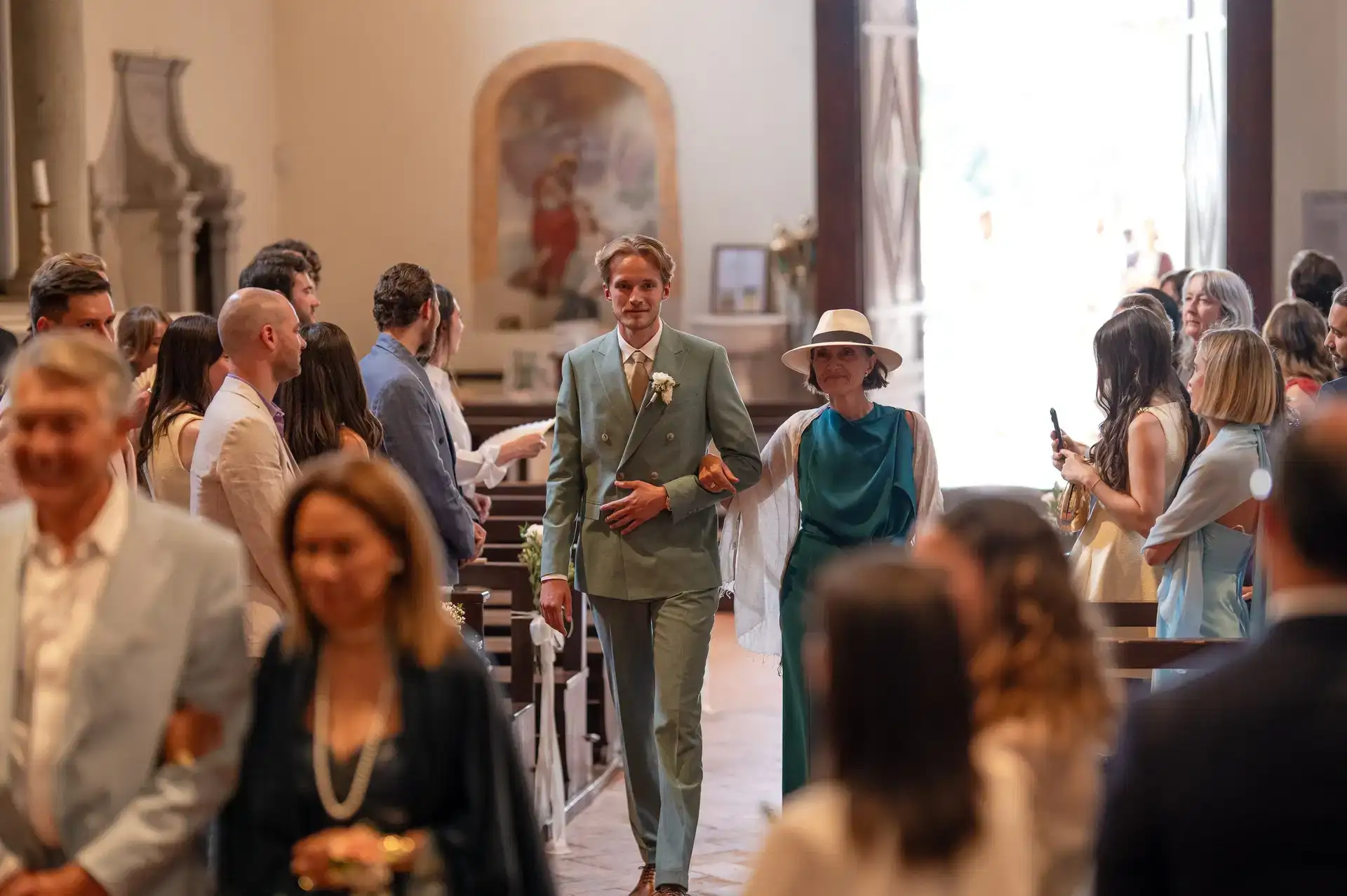
One experience I'll always remember is planning the wedding of Arūnas and Smiltė, a lovely Lithuanian couple who introduced me to the tradition of welcoming newlyweds with bread, salt, and water.
Now, I have to admit, this was something completely unfamiliar to me!
But for them, it was such an important part of their culture and their wedding that leaving it out simply wasn't an option.
And I have to thank them for their incredible patience!
We exchanged what felt like hundreds of messages, photos, and videos while they explained every little detail of the tradition, what it meant, and exactly how they wanted it to happen.
At first, I honestly struggled to imagine how it would all come together. But the more they explained, the more I began to understand the meaning behind it.
And on their wedding day? Everything went perfectly!
I had the pleasure of watching this beautiful moment unfold, knowing how much it meant to them and how much care we'd put into making it happen.
What initially seemed so unusual to me became one of those experiences that reminded me how much I can learn from my couples.
And that's not the only tradition I've discovered!
At Albanian weddings, for example, money may be thrown or showered over the newlyweds while they're dancing, as a joyful gesture associated with prosperity and good fortune.
I've also encountered a beautiful moment of devotion to the Virgin Mary during Catholic wedding Masses for American couples, sometimes involving prayers, flowers, or a special hymn.
These customs may be completely different from what I'm used to, but they often carry a deep meaning connected to family, faith, and cultural heritage.
And understanding that meaning is what allows me to help couples include them in their celebration with the attention they deserve.
The Italian aperitivo might surprise you!
Now, let's talk about something we're particularly proud of in Italy: food!
In many countries, cocktail hour is a relatively short moment for drinks and a few appetisers before dinner.
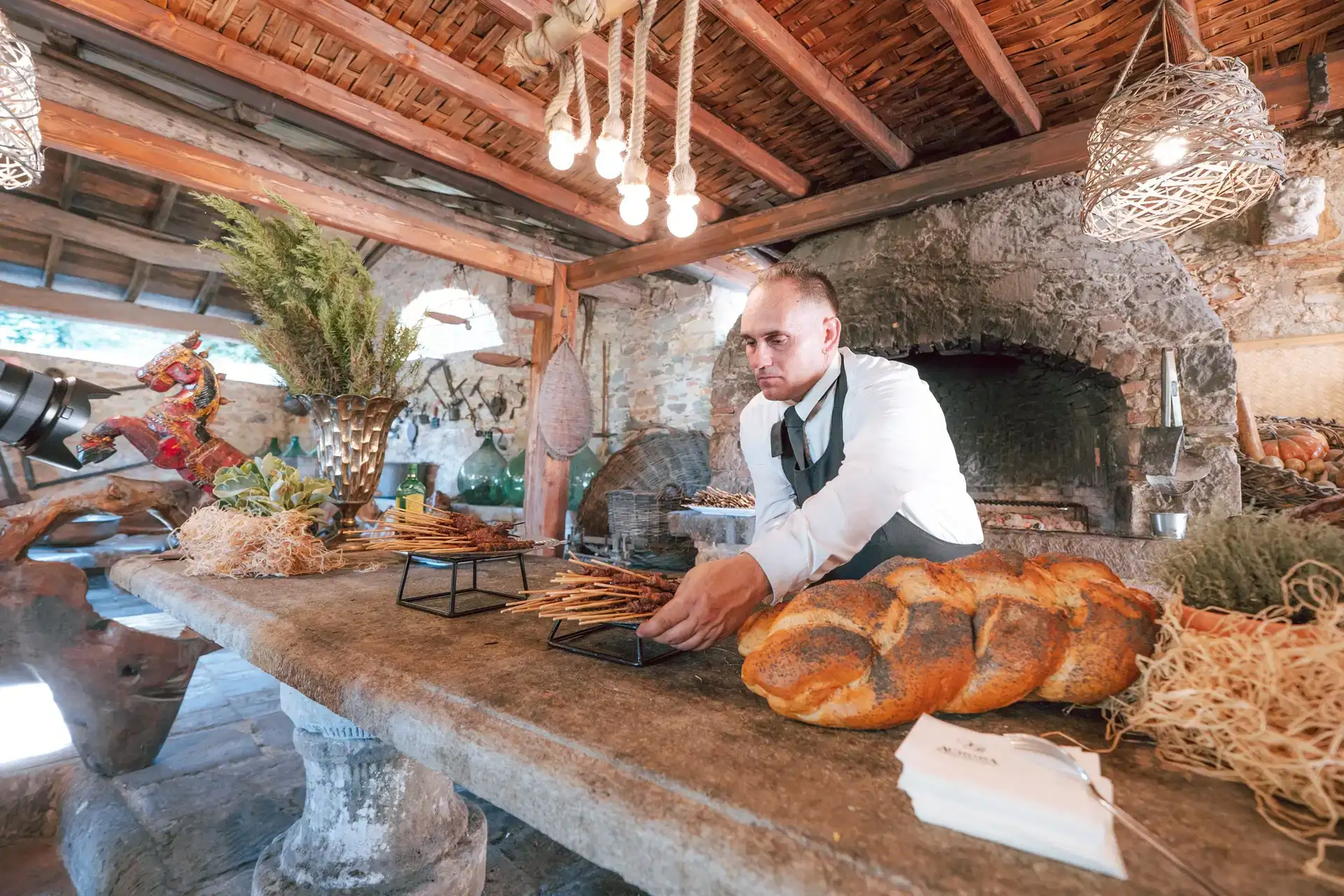
In Italy, the wedding aperitivo can be a much bigger part of the celebration.
Food stations, freshly prepared dishes, local specialities, drinks, and plenty of time for guests to socialise.
Sometimes, when I explain just how generous an Italian wedding aperitivo can be, my couples are genuinely surprised!
And this can also influence the rest of the menu.
If you're planning a particularly rich aperitivo, perhaps you don't need quite as many courses during dinner.
There's no need to follow a traditional Italian menu if it doesn't suit the kind of reception you have in mind.
Speeches, dancing, and the rhythm of the day
Here's another difference I've noticed over the years: wedding speeches!
In traditional Italian weddings, speeches aren't usually such a big part of the reception. There might be a few words from the couple, a toast, or a spontaneous moment with family and friends, but we don't generally dedicate a large part of dinner to them.
For many of my international couples, however, speeches are a completely different story!
I've particularly noticed this with French and Norwegian weddings, where speeches can be an incredibly important part of the celebration.
And they can be long. I mean, reeeeeally long!
Parents, siblings, best friends, bridesmaids, groomsmen... everyone might have something to say, and sometimes those speeches turn into entire stories, full of memories, laughter, and emotional moments.
I actually love seeing how much importance couples give to these personal contributions.
But from a planning perspective, there's something worth remembering: speeches take time, and that time needs to be included in the wedding schedule.
If several people are speaking during dinner, we need to coordinate with the catering team, consider when each course will be served, and make sure the evening doesn't run too late.
Because as lovely as speeches can be, we also want to leave enough time for everything else you've planned, especially if you're looking forward to a great party afterwards!
And that's exactly why I always ask my couples about their traditions and expectations before creating their wedding timeline.
Bringing your traditions to Tuscany
One thing I've learnt is that planning a destination wedding isn't about replacing your own traditions with Italian ones.
Quite the opposite!
I love seeing couples bring their culture, family customs, and personal traditions to Tuscany.
Sometimes that means incorporating a meaningful ritual into the ceremony. Other times it's a particular song, a special dance, a traditional dish, or a moment involving parents and relatives.
And sometimes it's something I've never encountered before!
When that happens, I ask questions, learn about the tradition, and work with the couple to understand how best to include it in the celebration.
Because even the simplest ritual might require some practical planning: the right timing, a particular setup, coordination with the celebrant or MC, or making sure the photographer knows what's about to happen.
These details matter, especially when a tradition has a personal or cultural significance.
What I've learnt from planning international weddings
Working with couples from different countries has taught me that there isn't one correct way to celebrate a wedding.
Some traditions are wonderfully familiar, others are completely new to me, and some have surprised me in the best possible way.
And I think that's one of the most interesting things about destination weddings.
My couples come to Italy to celebrate their love, but they also bring a little piece of home with them.
And every time, I get to learn something new.
So if you're planning your wedding in Tuscany and there's a tradition from your country, your family, or your culture that you'd love to include, tell me about it!
I'd genuinely love to hear the story behind it and help you find the right place for it in your celebration.
Book a free call and let's talk about your plans.